Custom Card Packaging
Packaging sized around your complete card set. Compare printed tuck boxes, rigid presentation boxes and shrink wrap for playing cards, game decks, tarot and learning products.
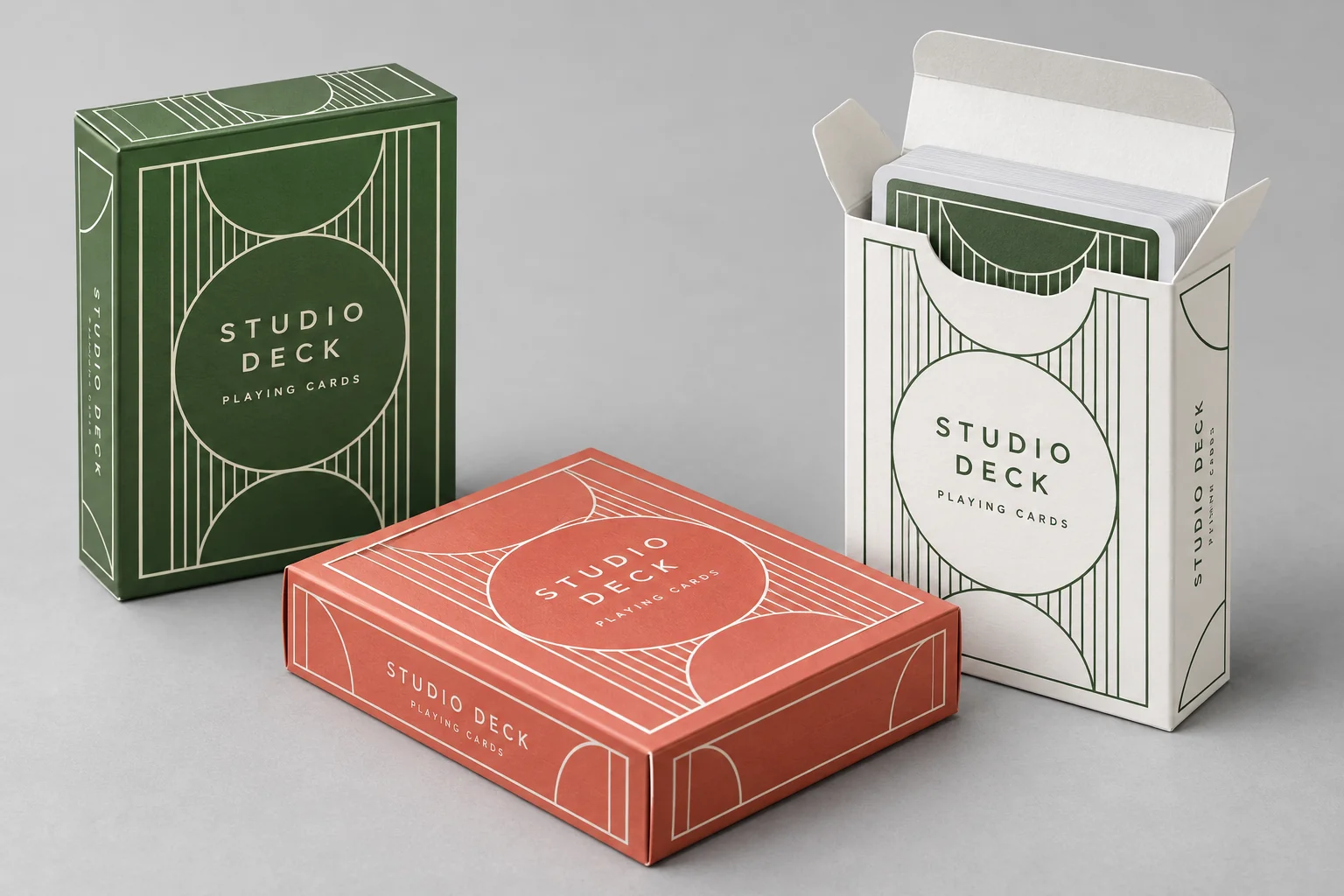
Printed tuck boxes
Folded paperboard cartons with top flaps and coordinated artwork.
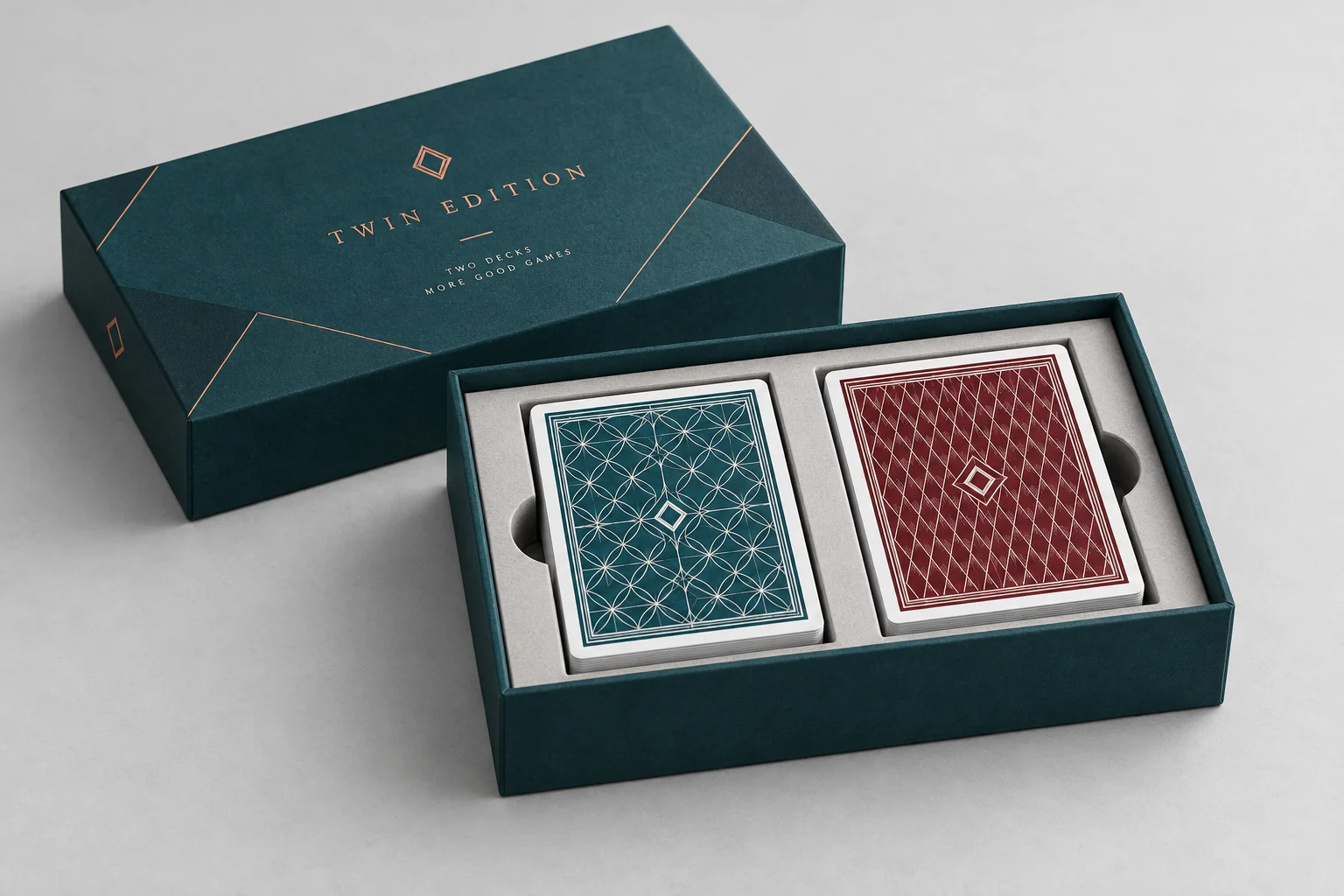
Rigid presentation boxes
A lift-off lid and fitted insert for a two-deck collection.
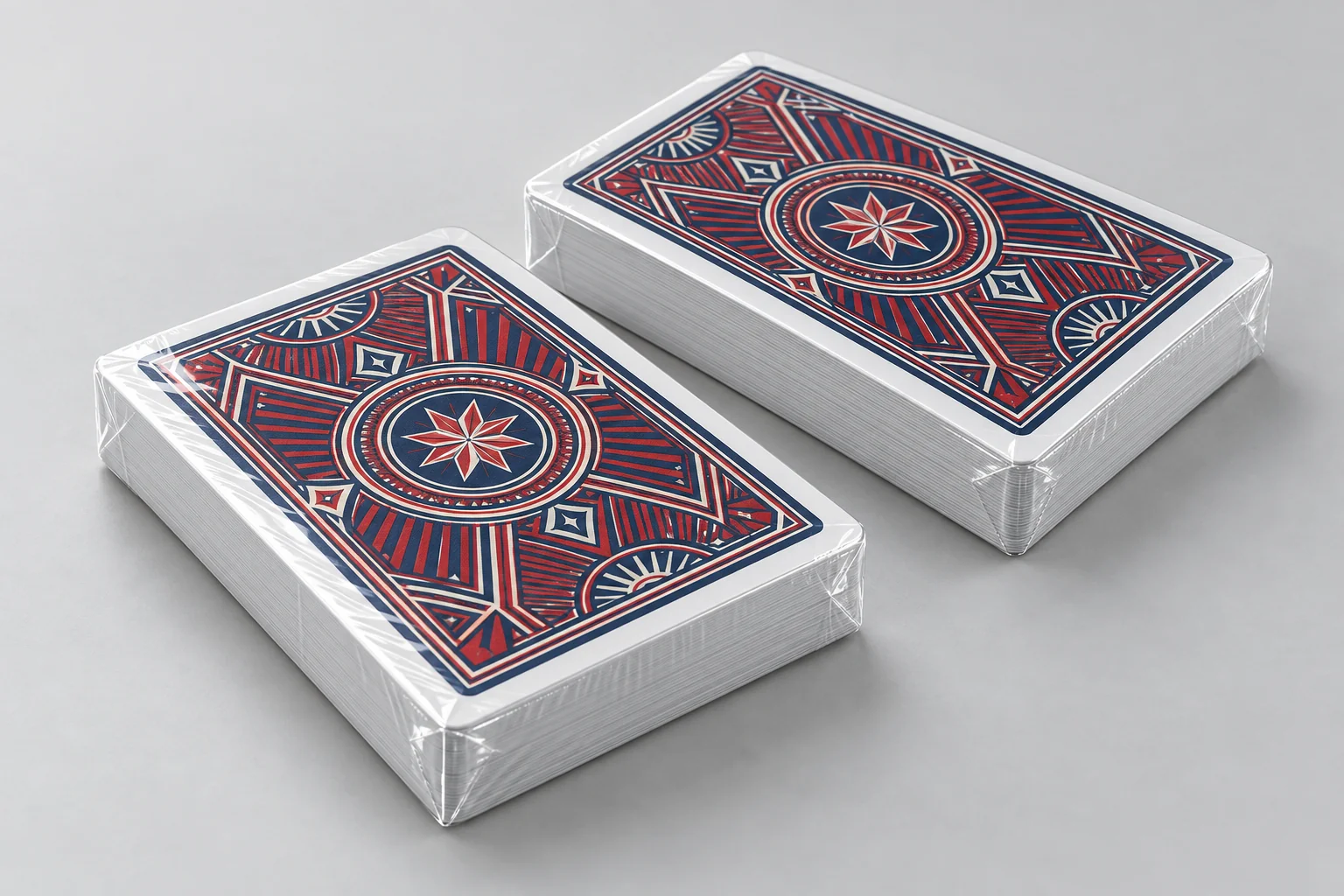
Shrink-wrapped decks
Transparent film keeps a deck together without an outer retail box.
Illustrative design references, created with AI assistance. Your artwork, materials and final configuration are agreed for your project.
Made to your specification
Start with the finished contents.
Card count, finished thickness, booklet placement and inserts determine the internal fit. Agree the structure before final artwork.
Explore playing card formats| Order scope | Bulk card projects from 1,000 sets. Packaging quantities and standalone requirements reviewed separately. |
|---|---|
| Base packaging | Shrink wrap or an agreed heat-sealed pack; shipping protection considered separately. |
| Retail structure | Printed paperboard tuck box. Confirm opening style and the finished card stack. |
| Presentation options | Rigid box with reviewed inserts or dividers. Tin and custom structures require separate review. |
| Artwork & decoration | Approved dieline with panel orientation, folds and glue areas. Specify foil, UV or other effects separately. |
| Supply & quote | State flat, assembled or packed with cards. USD factory quote; final PI and payment agreed offline. |
From artwork to an approved sample
Three checks before production.
Structural mock-up
Fit the full stack, guide and inserts. Check opening, removal and closure before approving the dimensions.
Printed proof
Review panels, copy, color and effects using the agreed proof method. An unprinted mock-up cannot approve decoration.
Assembled set
Confirm component placement and packing order. Review outer cartons, weight and volume separately from the retail box.
Project questions
Before you order.
Practical answers on files, materials, sampling and the complete set.
Ask a questionWhich packaging is a practical starting point?
Shrink wrap keeps a bulk deck together without a retail box. A printed tuck box adds a compact branded carton. A rigid box can accommodate a larger presentation, multiple decks or a guidebook. Choose around contents, use and budget.
Can I reuse a dieline from another box?
Use it as a reference, not the final production template. Finished stock, card count, booklet placement and construction must match. Confirm the production dieline before preparing final artwork.
Can I request inserts or dividers?
Yes, subject to review of the full contents and structure. List inserts, dividers, booklet pockets and separate wraps as components so material, assembly and price are clear.
Does packaging change shipping costs?
It can change carton size, gross weight and freight volume. State whether the goods travel in bulk cartons or individual parcels. Do not assume a retail tuck box or gift box is enough for shipping protection.
What should a packaging sample approve?
A structural mock-up checks fit; a printed proof checks artwork and agreed decoration; an assembled set checks the complete product. Confirm materials, process limitations, sample costs and schedule before sampling.
Your next card project
Have a format in mind?
Send your quantity, cards per set, size and packaging idea. You can share artwork later.
Example brief: 1,000 packed sets; 80 cards at 70 x 120 mm; one guidebook; rigid box; guide above the cards; structural sample requested.
Or email info@maxdeckprint.com. Sample fees, shipping, final PI and payment are confirmed separately.