In brief: Black-core stock is commonly chosen when hiding the face of a card through its back is important. Blue-core stock can be a practical alternative when the finished sample meets your opacity and budget requirements. Neither core color alone guarantees thickness, stiffness, shuffle feel or durability.
Updated 18 September 2026. Scope: stock selection for bulk playing cards and card games.
What is the difference between black core and blue core cards?
The core is a light-blocking layer inside the card stock, not the printed surface color. Black-core and blue-core describe different stock constructions. Compare the supplier’s exact stock, finished artwork and coating rather than treating the color name as a universal quality grade.
For hidden-information games, opacity is a functional requirement: a player should not be able to identify a card from the other side in normal play. For promotional or retail decks, handling, print appearance, packaging and cost also matter. Selling a deck at retail does not automatically make black core the only suitable choice.
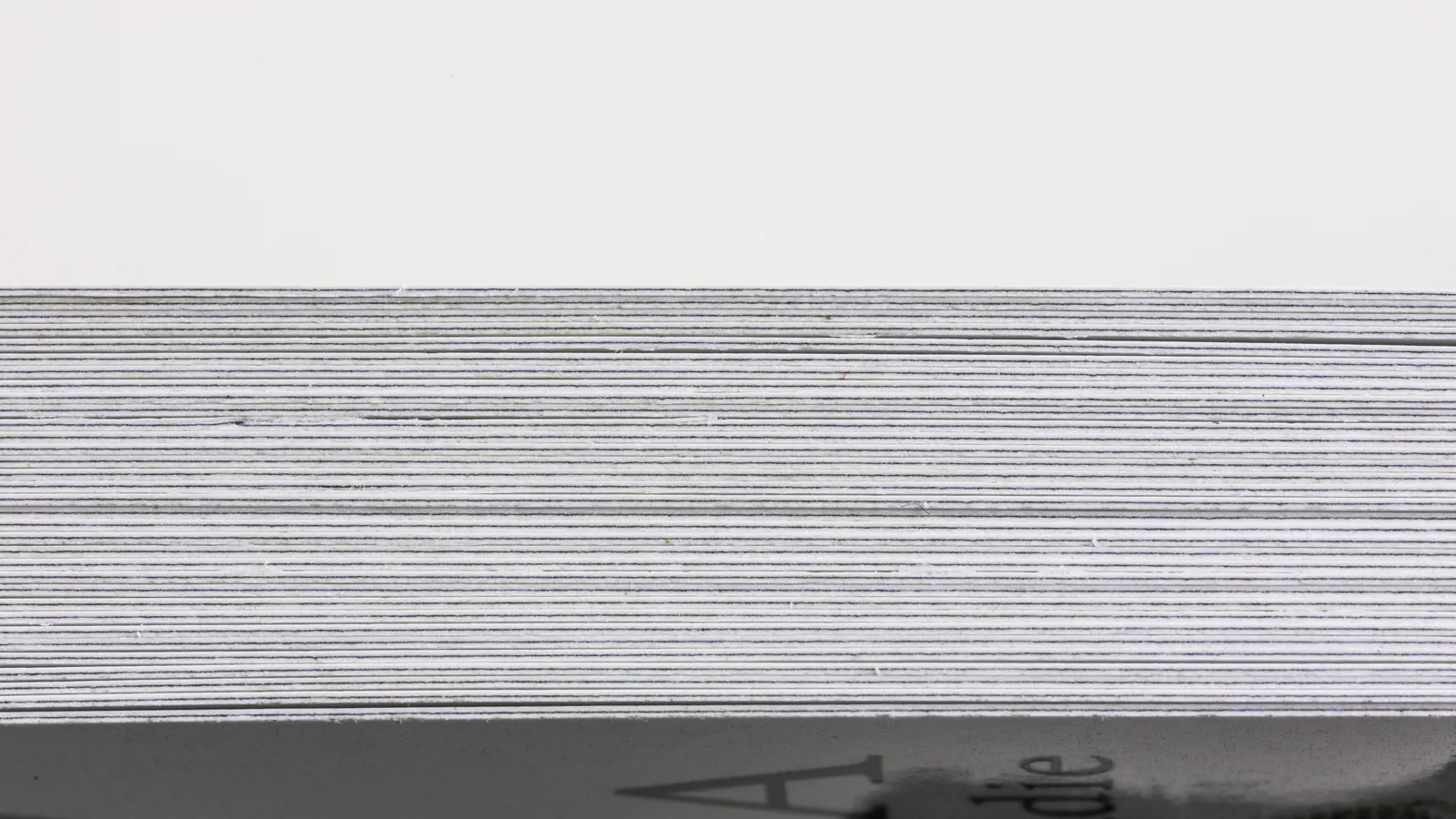
Black core vs blue core: what to compare
| Buying question | Black core | Blue core | How to check |
|---|---|---|---|
| Does artwork show through? | Often selected for stronger light blocking; confirm the actual stock. | Can suit decks where the finished sample passes the opacity check. | Use identical artwork under the same lighting. |
| Is it thicker or stiffer? | Not determined by the black core alone. | Not determined by the blue core alone. | Compare finished card caliper, bending and recovery. |
| How does it shuffle? | Depends on stock construction, coating and finish. | Also depends on stock construction, coating and finish. | Shuffle and deal complete decks with the same finish. |
| Which costs more? | May carry an additional material cost. | May offer a lower-cost alternative. | Request like-for-like quotes; do not assume a fixed percentage difference. |
| Will the deck fit the box? | Check the finished stack height. | Check the finished stack height. | Measure the complete card count, including rules or inserts. |
Does a higher GSM mean a better playing card?
No. GSM measures paper mass per unit area, not thickness. Two stocks with the same GSM can have different caliper and stiffness. Surface coating, lamination or texture can also change how cards slide, fan and shuffle. Specify the stock and finish together, then approve a finished sample.
A darker core is not proof of casino-grade performance, and a heavier card is not automatically easier to shuffle. Choose for the intended use: repeated play, a collector edition, a campaign giveaway or a sleeved card game.
How to test finished samples fairly
- Keep the comparison consistent. Use the same size, card count, artwork and finish where possible. Label each stock clearly.
- Check opacity. Look for recognizable face artwork through the back under typical table lighting and stronger light. Test your actual light and dark designs.
- Handle a complete deck. Fan, deal and shuffle it. Note surface drag, cards sticking together, bending recovery and edge feel.
- Check the packaging. Test the full stack in the intended box, including sleeves or inserts when applicable.
- Record the approved specification. Keep the sample and written stock/finish details as the production reference. Confirm any substitution before production.
Request available stock and finish comparisons through our sample request form. Sample availability, custom proof costs and delivery are confirmed before dispatch.
Which stock should you request for your project?
For a conventional poker deck, start with the custom playing card specifications. If opacity is a priority, review our black-core playing card options and request a blue-core comparison using the same size and finish.
For a game with hidden roles, draw piles or different card backs, include those details in your card game production brief. Core choice cannot compensate for inconsistent back artwork or incorrect sorting.
Our bulk projects start at 1,000 complete decks or sets. To judge the price difference fairly, compare the complete cost per deck, including packaging and sampling, rather than only the paper surcharge. A stock change after proof approval may require new checks; allow for them in your production and shipping schedule.
Buyer FAQ
Is black core always better than blue core?
No. Black core is commonly selected for opacity, but the better choice is the finished stock and finish that meet your play, appearance and budget requirements. Test actual samples.
Does black core always cost more?
Not by a universal amount. Stock grade, availability, quantity and finish affect the quotation. Ask for both options with the remaining specifications unchanged.
Can I change core material after approving artwork?
Ask for a revised specification and quote before production. A material change can affect stack height, box fit, color appearance and the schedule, so another sample or proof check may be needed.
Ready to compare options? Send your project brief with card size, cards per deck, complete deck quantity, finish and packaging. We will review suitable stock options before confirming the final PI.