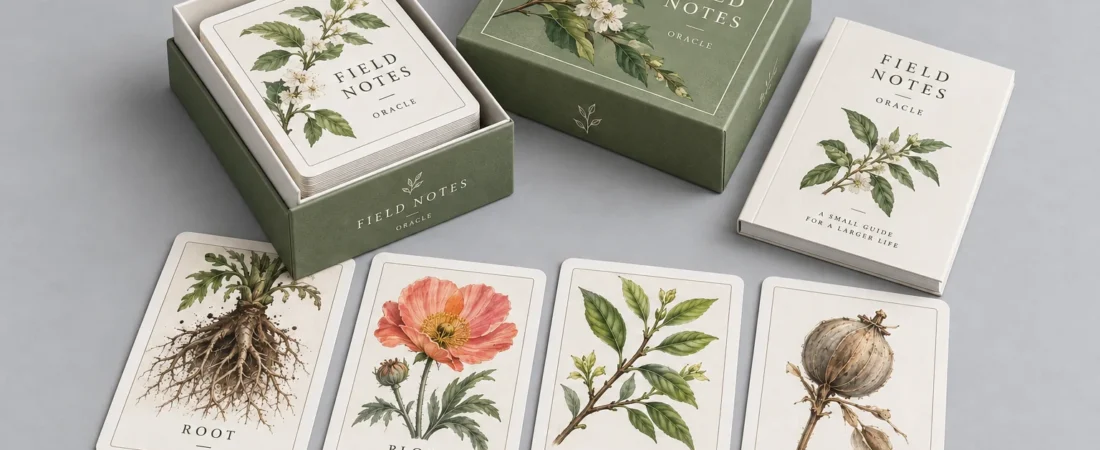
By Max Deck Print | Product development guide | September 2026
Distinctive tarot deck design starts with a particular reader and a coherent way to use the cards. A new visual theme is not enough if buyers cannot tell what the deck helps them explore, how approachable it is or why they would choose it over a deck they already own.
For artists and independent publishers, the product challenge is to connect illustration, interpretation and everyday use. This guide focuses on that connection. It does not make claims about prediction, treatment or guaranteed personal outcomes.
Who should feel that this deck was made for them?
Choose a primary reader. A beginner may need recognizable structure and clear explanations. An experienced reader may want a deliberate reinterpretation with enough context to understand the creator’s choices. An art collector may care most about the work as a cohesive visual collection.
These audiences can overlap, but their buying questions differ. A product description that promises to suit everyone can leave all of them uncertain. State the intended level of familiarity and show a representative reading example so visitors can judge the fit for themselves.
What is the difference beyond the illustration style?
Write a short editorial promise before expanding the artwork: “This deck uses [creative perspective] to invite [kind of reflection] for [reader].” This is a design brief, not a claim that the deck produces a therapeutic result.
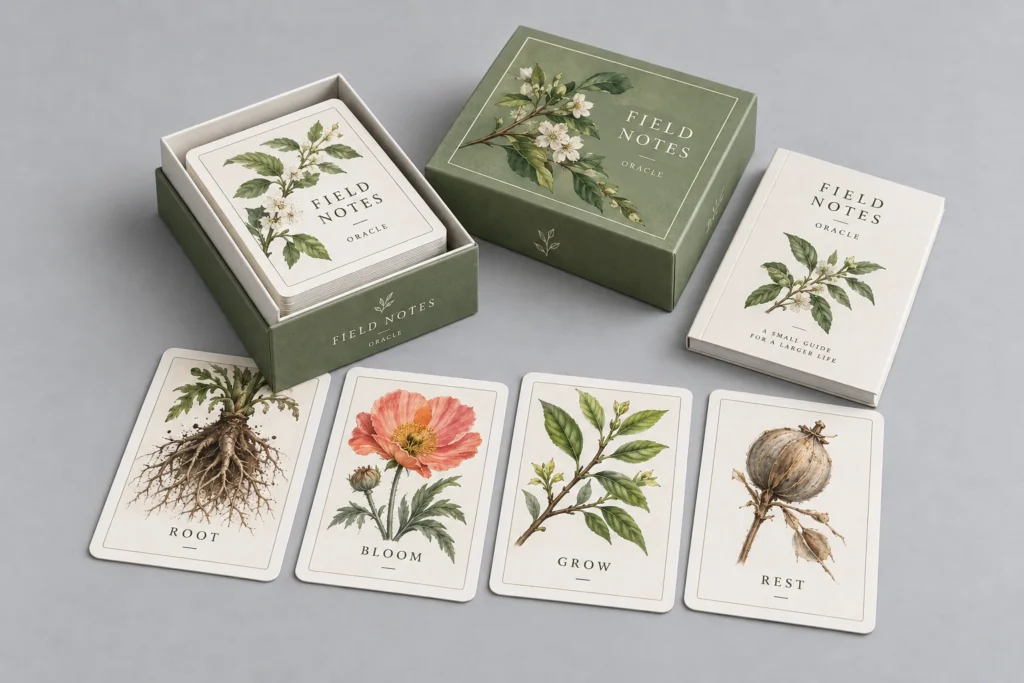
For example, a hypothetical seasonal oracle deck could organize prompts around noticing, choosing and revisiting. A card might connect a specific image to a question about an ordinary decision. The guide would explain why the image and prompt belong together. That is a more complete concept than adding unrelated positive statements to attractive landscapes.
| Product gap | Question to resolve | Useful evidence to show |
|---|---|---|
| Beautiful but difficult to interpret | How does an image connect to its meaning? | One card paired with its guidebook entry |
| Different art, unclear identity | What perspective unites the whole deck? | A small group of cards showing that connection |
| Beginner claim, advanced assumptions | Can a new reader begin unaided? | A short first-use guide and worked example |
| Strong gift appeal, little repeat use | What occasion brings the deck out again? | A simple, optional repeat-use activity |
How does the guidebook become part of the product?
A useful guidebook explains the creator’s system rather than repeating each card’s title in longer sentences. Give entries a consistent structure: the image’s role, an interpretation, a question and an optional practical reflection. Keep directions clear about what is suggested and what is left to the reader.
Test the guide with someone outside the project. Can they find the entry, connect it with the card and understand how to continue? If a printed guide is part of the advertised set, do not replace essential instructions with a link that requires an account. An optional digital supplement can add depth without making the physical deck incomplete.
How do you avoid a deck that feels inconsistent?
Review more than the cover and your favorite cards. Select an ordinary card, a visually dense card and a card with a difficult or ambiguous theme. Check whether their language, level of detail and interpretation style belong to the same product.
Changing names, suits or familiar symbols can be an intentional artistic decision. Explain the change instead of leaving the buyer to guess. For oracle decks, describe your own organization and use clearly rather than assuming readers know an unstated system.
What should the product page demonstrate?
- A representative selection of faces, not only one dramatic illustration.
- A readable example of the guidebook and its relationship to a card.
- The intended reader, language, contents and type of deck.
- A short example of use without promising a specific personal outcome.
- A clear distinction between design concepts and photographs of the finished product.
These details let a buyer judge suitability. They do not guarantee demand. Before a bulk order, discuss the concept with intended readers and separate comments about artistic preference from willingness to buy the complete set.
Frequently asked questions
Must every tarot or oracle deck target beginners?
No. A focused deck for experienced readers can be clearer than an all-purpose deck. Describe the knowledge it assumes and the support included.
Can a guidebook be the main point of difference?
Yes, if it offers a coherent perspective that works with the cards. More pages alone do not make the content more useful.
Plan the complete reading set
Explore custom tarot and oracle cards and share your intended card count, guidebook outline and packaging idea through Contact Us. Max Deck Print supports physical production from 1,000 complete sets. The creator remains responsible for the deck’s interpretations, original content and audience fit.